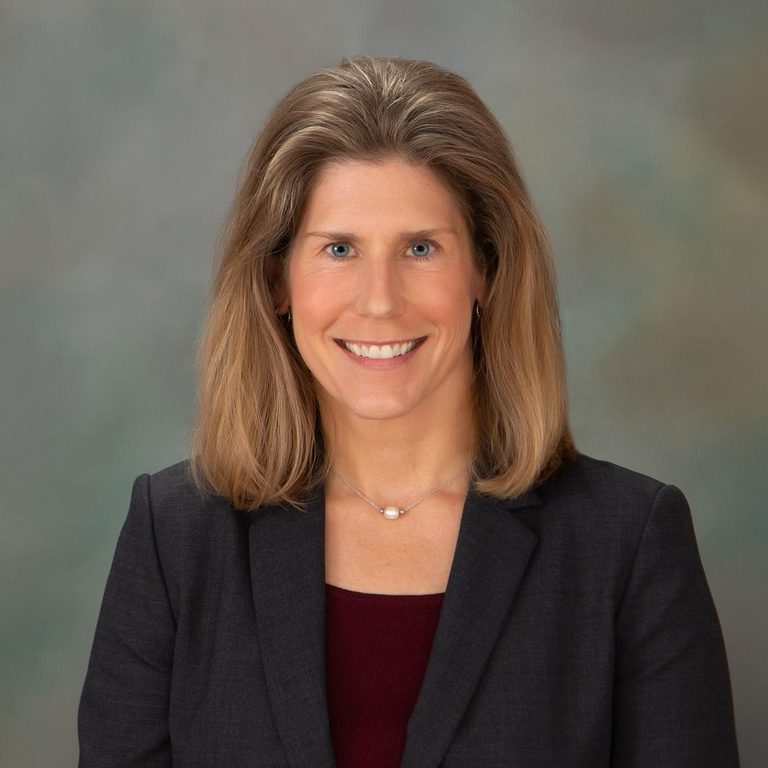
Megan Kathleen Cavanagh, chief justice of the Michigan Supreme Court, is seeking reelection in the Nov. 3, 2026, general election.
Six candidates are competing for two eight-year seats on the statewide nonpartisan ballot. Voters may choose up to two candidates, according to Michigan’s official candidate list.
Cavanagh responded to the Northville-Novi News candidate questionnaire on Oct. 5. Unless otherwise noted, the information and responses below come from that questionnaire.
Asked why she is running, Cavanagh said: “I am seeking re-election for Justice of the Michigan Supreme Court to continue strengthening a justice system that is fair, accessible, and responsive to the people it serves.”
She said her priorities include improving access to courts, supporting problem-solving courts and strengthening outcomes for children and families.
Candidate information
Background: Cavanagh was born in Lansing and raised in East Lansing, according to her campaign biography.
Education: Cavanagh said she earned an undergraduate degree in environmental engineering from the University of Michigan and a law degree from Wayne State University Law School.
Family: “I have a wonderful husband and two daughters, one step-daughter, and one step-son,” she said.
Party nomination: Cavanagh was nominated by the Michigan Democratic Party. The Supreme Court election is nonpartisan.
Family in public service: Cavanagh said her father, Michael Cavanagh, served on the Michigan Supreme Court for 32 years, including four years as chief justice. Her uncle, Jerome Cavanagh, served as mayor of Detroit.
“My father, however, was my greatest inspiration growing up and really shaped how I think of public service,” she said.
Experience and public service
Cavanagh has served on the Michigan Supreme Court since Jan. 1, 2019, according to the Michigan Supreme Court Historical Society.
Her fellow justices unanimously selected her as the next chief justice in March 2025.
Before joining the court, Cavanagh practiced appellate law in Detroit for 15 years. Earlier in her career, she worked as an environmental consultant, according to her campaign biography.
“My 15 years as an appellate attorney equipped me to decide cases and improve how courts serve families, workers, and communities,” she said.
Cavanagh said that experience prepared her to analyze complex legal questions, interpret statutes and constitutional provisions, and consider how appellate decisions affect people and communities.
On the issues
Access to justice: Cavanagh identified making courts easier to understand and navigate as a priority.
“Improving access to justice and reducing delays begins with making courts easier to understand and navigate while ensuring that every person’s rights are protected,” she said.
She cited the Justice for All Commission as part of the court’s work to improve access to civil justice. The Supreme Court created the commission in 2021, before she became chief justice, according to the court’s administrative order.
Public trust and court resources: Cavanagh said the justice system faces challenges involving access, public confidence and the resources courts need to serve their communities.
“The Supreme Court’s role is to use its administrative responsibilities to address these issues directly,” she said.
She emphasized collaboration with trial courts, legal professionals and community partners.
Children, families and problem-solving courts: Cavanagh said she supports treatment and problem-solving courts, stronger legal representation for families, improved child welfare outcomes and collaboration with tribal courts.
“Success should be measured by whether courts are transparent, accessible, consistent, and responsive to the real world needs of Michiganders,” she said.
What sets her apart: Cavanagh emphasized her appellate law background and experience deciding cases on the Supreme Court.
“These experiences have reinforced my commitment to applying the law independently, treating every case with care, and ensuring Michigan’s courts serve the public with fairness, transparency, and integrity,” she said.
Endorsements
Cavanagh’s confirmed 2026 endorsements include:
Other candidates
The other candidates are Noah P. Hood, Thomas W. Howe, Casandra Morse-Bills, Michael Warren and Jody White, according to official state election records.
Advice that guides her
Cavanagh said the best advice she received came from her father.
“His advice was to stay humble in service to others,” she said.
He reminded her that real people and lives are affected by the court’s decisions.
This profile draws primarily on Megan Kathleen Cavanagh’s responses to the Northville-Novi News candidate questionnaire, with additional information from her campaign biography, state election records, court records, the Michigan Supreme Court Historical Society and endorsing organizations. Responses have been excerpted and paraphrased; direct quotations retain her wording.